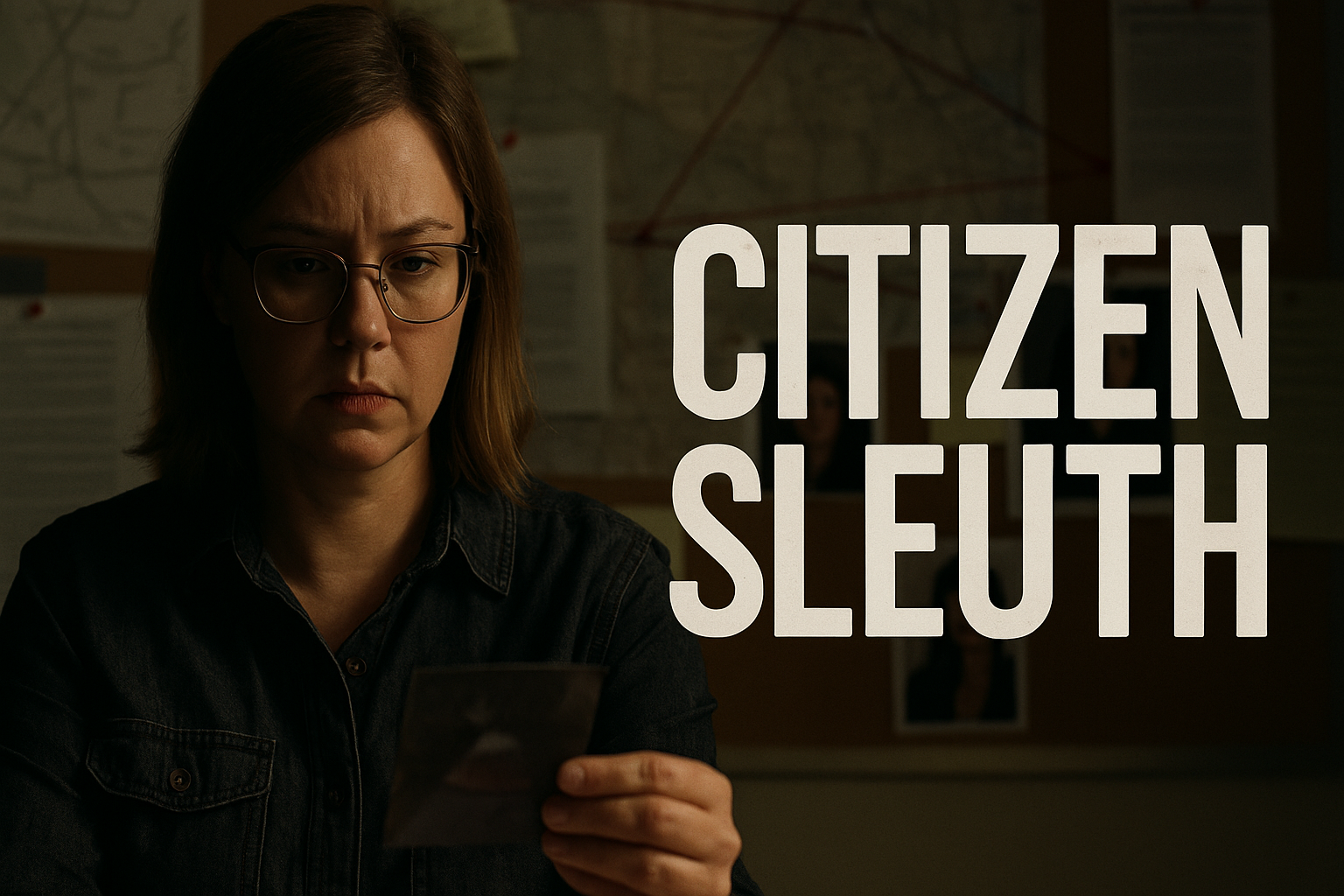
A gripping, thought-provoking documentary that examines the true-crime world through the eyes of a creator becoming entangled in her own investigation.
🎬 Introduction:
Citizen Sleuth is not just a documentary — it’s a mirror held up to the entire true-crime industry.
It follows amateur podcaster Emily Nestor, creator of the real-life true-crime podcast Mile Marker 181, as she becomes sucked into the case she’s covering. But instead of simply delivering crime facts and mystery, the film challenges the ethics behind true-crime storytelling itself.
The documentary is tense, uncomfortable, self-aware, and shockingly honest.
It reveals how easily an investigator’s good intentions can turn into obsession — and how public storytelling can distort truth in ways that are both dangerous and deeply human.
🔍 Plot Summary (Spoiler-Free)
Emily Nestor is a small-town true-crime podcaster investigating the suspicious death of Jaleayah Davis. From the moment she appears onscreen, it’s clear she has passion, empathy, and determination — but also emotional vulnerability.
As the documentary progresses, Emily:
- interviews witnesses
- challenges police findings
- forms her own theories
- builds a fast-growing audience
- becomes a voice of “justice” in her community
But with her rising popularity comes enormous pressure to deliver compelling content.
Slowly, the film reveals the ethical dilemmas she faces:
- Are her theories true, or just compelling?
- Is she helping the family… or giving them false hope?
- Is she uncovering truth, or building a narrative?
- Who does a citizen investigator owe the most loyalty to — the audience or the truth?
As Emily begins to confront uncomfortable contradictions in her own investigation, the documentary evolves from a simple crime story into a profound exploration of the dark side of citizen journalism.
🌟 What the Documentary Does Brilliantly
✔️ 1. A Raw, Honest Character Study
Emily Nestor is not framed as a hero or villain.
She is human — flawed, passionate, conflicted, and sometimes blinded by her own desire for justice.
✔️ 2. Explores the Ethics of True Crime
Few documentaries dare to question:
- the entertainment value of tragedy
- audience demand for shocking twists
- creators’ responsibility toward grieving families
- the line between advocacy and exploitation
This one does — and does it courageously.
✔️ 3. Tense, Cinematic Storytelling
With a dark, investigative visual style, the film feels like a thriller rather than a typical documentary.
Close-ups, maps, digital evidence boards, and atmospheric lighting amplify the mystery.
✔️ 4. A Powerful Commentary on Parasocial Relationships
As Emily gains followers, the documentary reveals how public attention can shape — and distort — an investigation.
✔️ 5. A Shocking, Thought-Provoking Third Act
The final sections force viewers to question everything they believed earlier in the film.
⚠️ Where the Film May Struggle
❌ 1. Emotionally Heavy
The subject matter — including death, grief, and public speculation — can be mentally draining.
❌ 2. Not a Traditional “Solved” Mystery
Viewers expecting a clean resolution may feel frustrated.
The film is more about Emily than the case.
❌ 3. Some Viewers May Disagree With Its Critique
Fans of the podcasting genre may feel the film is too harsh.
🧠 Themes That Make the Film Stand Out
🔹 Truth vs. Narrative
The story questions whether humans seek truth — or simply a story that feels true.
🔹 Ambition vs. Ethics
Where is the line between justice and career-building?
🔹 Public Fascination with Crime
The film highlights society’s hunger to be involved in tragedies that aren’t their own.
🔹 Responsibility of Citizen Investigators
Just because you can investigate… does it mean you should?
🎯 Final Verdict
⭐ 9.0 / 10 — A bold, unsettling, and essential documentary for the true-crime era.
Citizen Sleuth succeeds because it refuses to comfort viewers.
It forces us to question not only creators, but ourselves — the audiences who consume tragedy as entertainment.
The film is gripping, emotionally complex, and vital viewing in an age where anyone with a microphone can become an investigator.
Recommended For:
✔ True-crime fans
✔ Viewers interested in investigative ethics
✔ Documentaries with psychological depth
✔ Fans of Don’t F**k With Cats, The Jinx, and Serial
Not For:
✖ Viewers wanting a simple mystery
✖ People uncomfortable with self-reflective criticism
✖ Anyone wanting a “feel-good” documentary
About the Author


