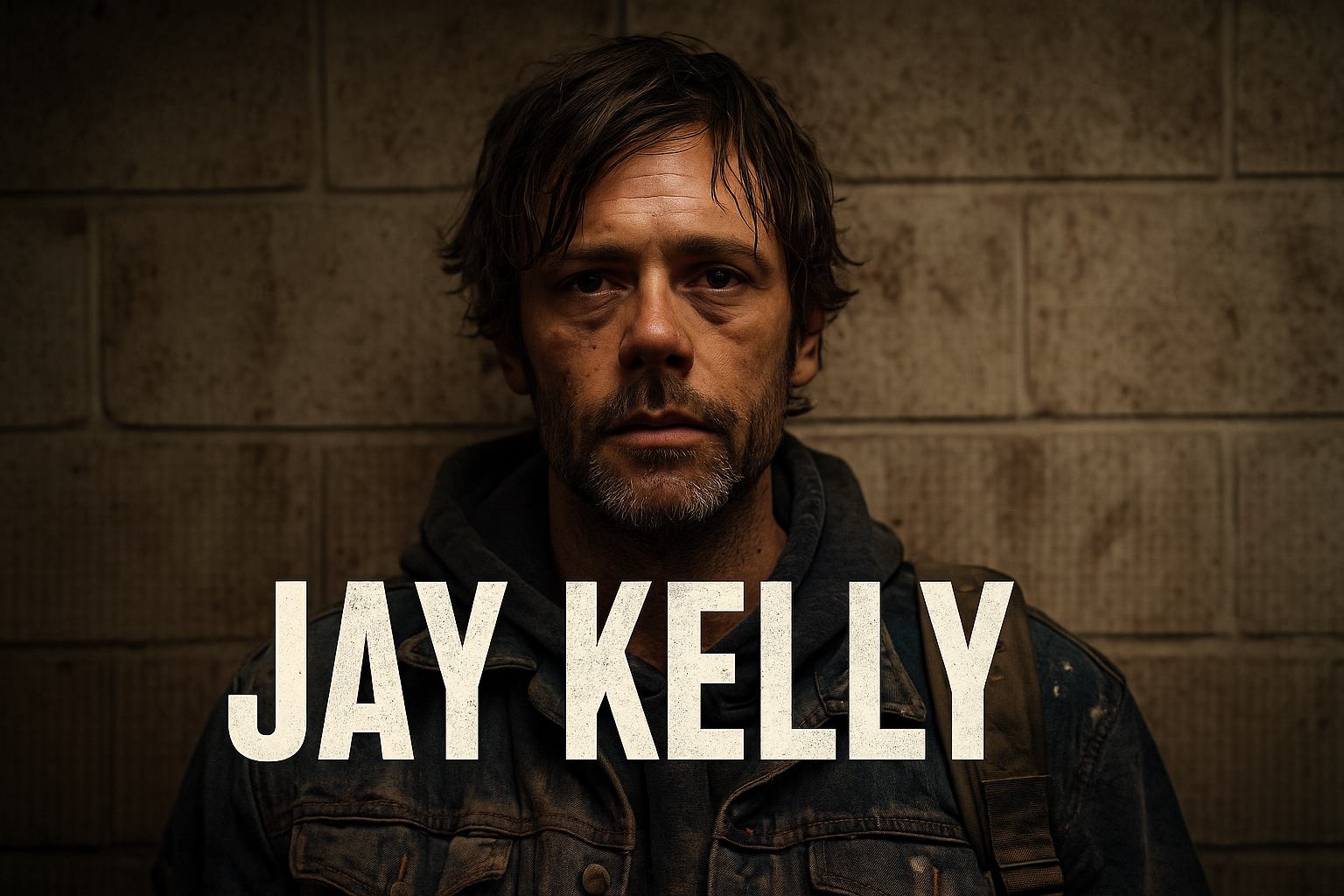
A gritty, character-driven survival drama about a man trying to outrun his past while searching for something worth living for.
🎬 Introduction
Jay Kelly is a raw, emotionally charged indie drama that follows one broken man’s fight to reclaim his humanity.
It’s not a glossy studio film — it’s intimate, grounded, and uncomfortably real.
Told with cold realism, atmospheric lighting, and a haunting lead performance, the movie explores trauma, addiction, loneliness, and the fragile hope of redemption.
This is not a hero story.
It is a human story — bruised, tired, and painfully honest.
🧱 Plot Summary (No Spoilers)
Jay Kelly is a man running out of road.
Once a promising blue-collar worker with a family and stable life, Jay has spiraled due to:
- addiction
- unresolved childhood trauma
- violent tendencies he struggles to control
- guilt from a tragic accident that destroyed everything he loved
Now living out of motels, shelters, and abandoned buildings, Jay drifts through life carrying a single worn duffel bag — the only thing he has left.
But everything changes when:
- he witnesses a violent street incident that forces him to choose between escape and moral responsibility
- he meets Lena, a recovery counselor who sees the damaged man beneath the layers of self-destruction
- a mysterious figure from his past resurfaces, threatening to drag him back into the darkness
Jay must decide whether he will:
- continue running
or - finally confront the demons he has avoided for years
The film becomes a slow, heavy journey toward either rebirth… or collapse.
🌟 What the Film Does Brilliantly
✔️ 1. The Lead Performance Is Extraordinary
The actor playing Jay delivers a performance that is:
- quiet
- exhausted
- dangerous
- heartbreaking
His hollow eyes and tense body language tell the story even when he says nothing.
✔️ 2. Cinematography That Feels Like a Mood
Most of the film is shot in:
- dim alleyways
- flickering motel rooms
- abandoned factories
- train stations
- cold morning streets
The gritty aesthetic matches Jay’s inner world — damaged, lonely, and fading.
✔️ 3. Realistic Depiction of Trauma and Addiction
The film does not glamorize or exaggerate.
Jay’s struggles feel lived-in, researched, and honest.
✔️ 4. A Story About Choosing Humanity
What makes the film powerful is how it subtly explores:
- compassion
- forgiveness
- the weight of guilt
- the difficulty of starting over
Redemption here isn’t dramatic — it’s small, slow, and fragile.
⚠️ Where the Film Falls Short
❌ 1. Slow pacing
The movie is a true slow-burn character study.
Some viewers may find it too quiet or uneventful.
❌ 2. Secondary characters feel lightly developed
Because Jay’s inner world dominates the narrative, side characters—like Lena or old acquaintances—aren’t explored as deeply.
❌ 3. Heavy subject matter
The themes of addiction, violence, and emotional breakdown may feel overwhelming for some.
🧠 Themes That Make the Film Deep
🔹 Redemption Isn’t a Straight Line
Jay doesn’t magically transform. His progress is messy, painful, and not always successful — which makes it real.
🔹 The Past Isn’t Gone
It follows you until you choose to face it.
🔹 Human Connection Saves Lives
Lena’s small acts of compassion feel more powerful than grand dramatic gestures.
🔹 Hope Lives in Small Moments
A cup of coffee. A nod of respect. A moment of clarity.
The film argues that survival is made of these small victories.
🎯 Final Verdict
⭐ 8.2 / 10 — A gritty, emotional, beautifully performed portrait of a broken man trying to rebuild.
Jay Kelly is a film for those who appreciate:
- character-driven storytelling
- emotional realism
- slow-burning drama
- gritty indie cinematography
It is not a blockbuster.
It is a raw emotional punch — one that lingers long after the credits roll.
Recommended for:
✔ Fans of gritty indie dramas
✔ Viewers who enjoy redemption stories
✔ Cinematography lovers who appreciate mood and tone
✔ Audiences who like character psychology and emotional depth
Not recommended for:
✖ Fans of action-driven plots
✖ Viewers who dislike slow pacing
✖ Anyone uncomfortable with addiction or trauma themes
About the Author


