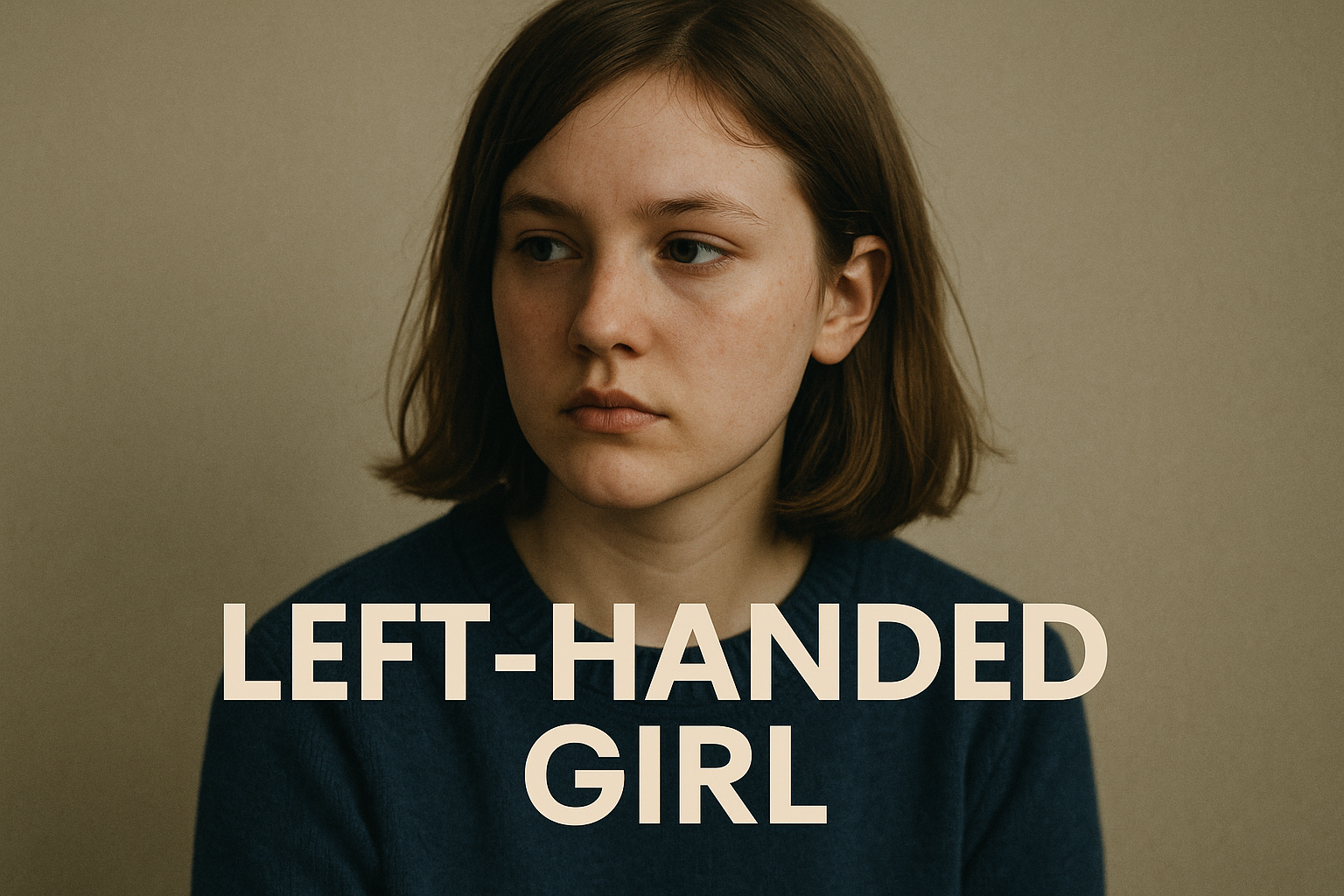
A quiet, emotionally layered coming-of-age drama about identity, loneliness, and the courage to be different in a world that wants you to be the same.
🎬 Introduction:
Left-Handed Girl is an intimate indie drama that approaches adolescence not with clichés, but with honesty, vulnerability, and raw emotional detail. Instead of dramatic twists, the film builds its world through:
- small gestures
- silences
- insecure glances
- internal battles
- and the delicate pain of growing up
This is a sensitive, deeply human story about a girl learning to accept the parts of herself she once considered flaws—her left-handedness becoming a symbol for everything that makes her different.
👧 Plot Summary (Spoiler-Free)
The film follows Mira, a 14-year-old introverted girl living in a rigid, conservative town where conformity is rewarded and individuality is quietly punished. She isn’t rebellious—just different.
She is:
- left-handed
- artistically gifted
- soft-spoken
- emotionally observant
But her differences make her a target for teasing, isolation, and subtle rejection.
As Mira navigates school pressures, a troubled relationship with her strict mother, and her struggle to find her voice, she begins sketching private drawings only with her left hand—creating a secret world where she can finally be herself.
Her life changes when she forms an unexpected friendship with Leena, a bold, outspoken new girl who embraces her own imperfections. Through this friendship, Mira is pushed to confront:
- her self-doubt
- her fear of judgment
- and her need to hide her true identity
A school art competition becomes the emotional climax of the story—forcing Mira to decide whether she will continue hiding her left-handed art or finally allow the world to see her.
🌟 What the Film Does Beautifully
✔️ 1. A Quiet, Powerful Lead Performance
The actress playing Mira delivers a subtle yet heartbreaking portrayal.
Her eyes communicate:
- anxiety
- longing
- self-consciousness
- hope
She feels real—like a girl you’ve met before.
✔️ 2. Stunning Minimalist Cinematography
Soft lighting, muted colors, and grounded camera work mirror Mira’s emotional world.
Every frame feels tender, intimate, and fragile.
✔️ 3. Honest Portrayal of Adolescence
The film avoids melodrama, instead exploring:
- school pressure
- identity confusion
- parent-child distance
- the desire to belong
- the fear of being seen
This realism is where Left-Handed Girl shines.
✔️ 4. Symbolic Use of Left-Handedness
The film uses “left-handedness” as a metaphor for all forms of difference—creative, emotional, physical, or personal.
✔️ 5. A Beautiful, Emotional Score
Soft piano, light acoustic strings, and airy ambient music enhance every emotional beat.
⚠️ Where the Film Might Struggle
❌ 1. Slow Pacing
The film takes its time.
Those wanting a fast or plot-heavy story may find it too quiet.
❌ 2. Sparse Dialogue
Much of the emotion is expressed through silence, which some viewers may find challenging.
❌ 3. Subtle Climax
The emotional peak is gentle rather than explosive.
This fits the tone but may feel understated to some.
🧠 Themes That Make the Film Deep
🔹 Being Different in a Conforming World
The film beautifully captures how small differences become sources of shame — until someone helps you see them as strengths.
🔹 Art as Healing
Mira’s drawings are her voice, her therapy, and her rebellion.
🔹 Friendship and Self-Discovery
Leena becomes the catalyst for Mira’s transformation — a reminder that the right friend can change everything.
🔹 Parent-Child Misunderstanding
The film sensitively portrays how parents can love their children deeply yet fail to understand them.
🎯 Final Verdict
⭐ 8.8 / 10 — A tender, beautifully acted coming-of-age drama with emotional depth and stunning subtlety.
Left-Handed Girl is the kind of film that stays with you—not because of big moments, but because of the quiet ones that feel painfully real.
It is perfect for viewers who love introspective, emotional, art-house storytelling.
Recommended For:
✔ Lovers of indie coming-of-age films
✔ Fans of sensitive, character-driven storytelling
✔ Audiences who appreciate visual poetry
✔ Anyone who has ever felt “different”
Not For:
✖ Viewers seeking fast pacing
✖ Fans of high-stakes drama
✖ Anyone who dislikes minimalist films
About the Author


